



Katyčiai
atyčiai is a small town located near the Šyša River, one of the oldest settlements in the Šilutė district municipality, with well-preserved architecture. According to the 1442 Treaty of Melno, Katyčiai belonged to the Grand Duchy of Lithuania. In 1555, it became part of Prussia. In the 18th century, large markets were held here. During the 18th century and the first half of the 19th century, many local residents died due to plague and cholera epidemics. German colonists were brought in to replace them. By 1861, Germans made up 80% of the local population. In 1905, Lithuanians made up 30% of Katyčiai’s residents. After the Klaipėda Revolt, Katyčiai became part of Lithuania. At the end of World War II, many Germans living in Katyčiai fled westward, and their place was taken by newcomers from various regions of Lithuania.
Katyčiai is adorned by an old Evangelical Lutheran church. Built in 1734 from fieldstones and bricks with a wooden tower, it stands beside the old cemetery. In 1801, a powerful storm broke the church tower. In 1894, the church underwent major reconstruction, gaining a strict rectangular shape and a reinforced wooden tower topped with a tent-like roof. The wooden tower held three bells, one of which was a gift from Queen Louise of Prussia. These bells rang until 1955.
In 1926, a watermill was built in Katyčiai, which supplied electricity to the town for a time after the war. Today, the building is in critical condition and in need of renovation.
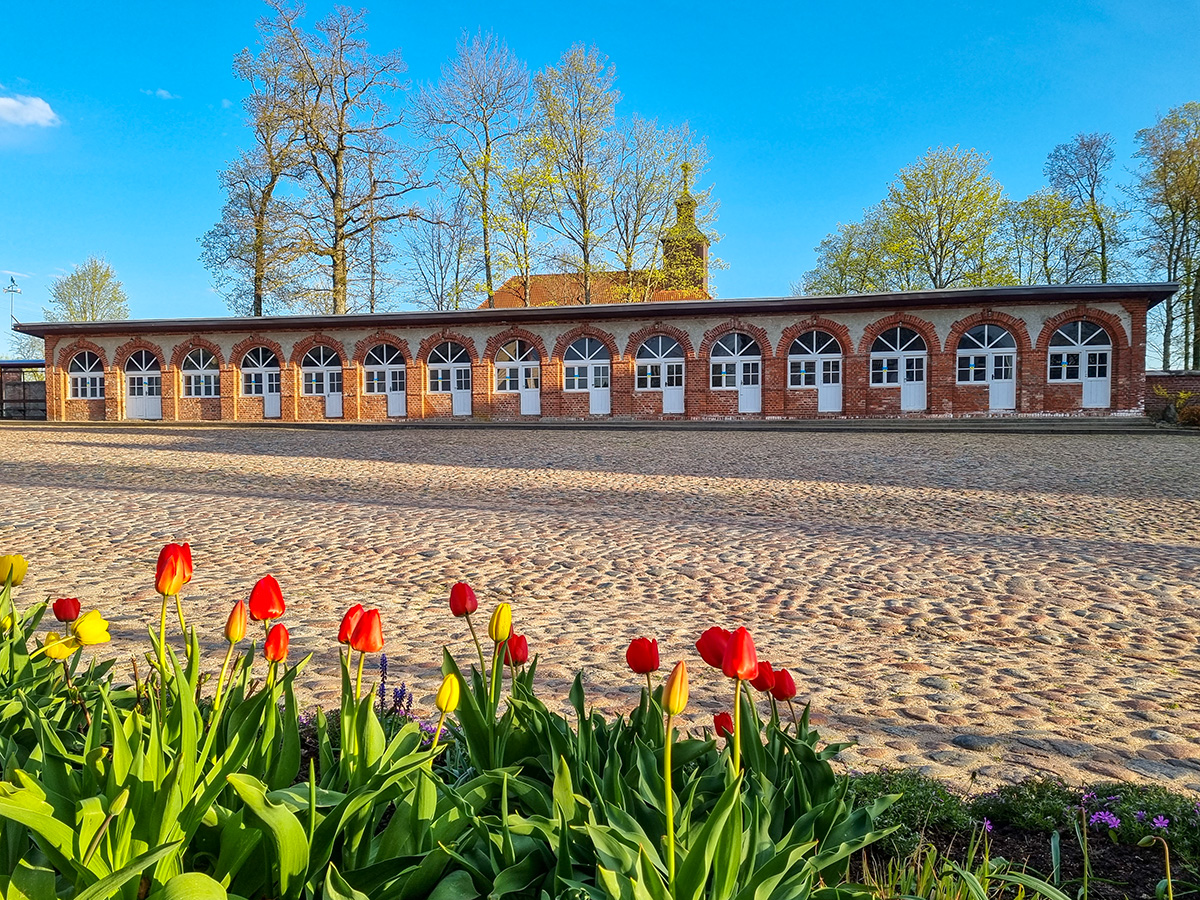
Next to the church, at the crossroads of the Degučiai, Stubriai, and Mediškėmiai roads, a market square was established with rows of shops. In 1906, the square began to be paved with stones. This distinctive market square was lined with ornate 1–3 story masonry buildings. After the war, the surrounding farmsteads were completely destroyed, and the old masonry buildings declined.
After 1990, Katyčiai continued to deteriorate. During the years of restored independence, three-story buildings in the market square were abandoned and later demolished. It was only in 2005 that the historical part of Katyčiai was included in the Register of Cultural Heritage of the Republic of Lithuania—without an indication of its value. Even after many years, the town has retained many German features. It remains a unique and intriguing place, where one can see something truly distinctive. Over the centuries, Katyčiai was known by various names: Kotyca, Koadjuthen, Koadjuten, Coadjuthen, Katytiai, Kottiten.