



Juknaičiai
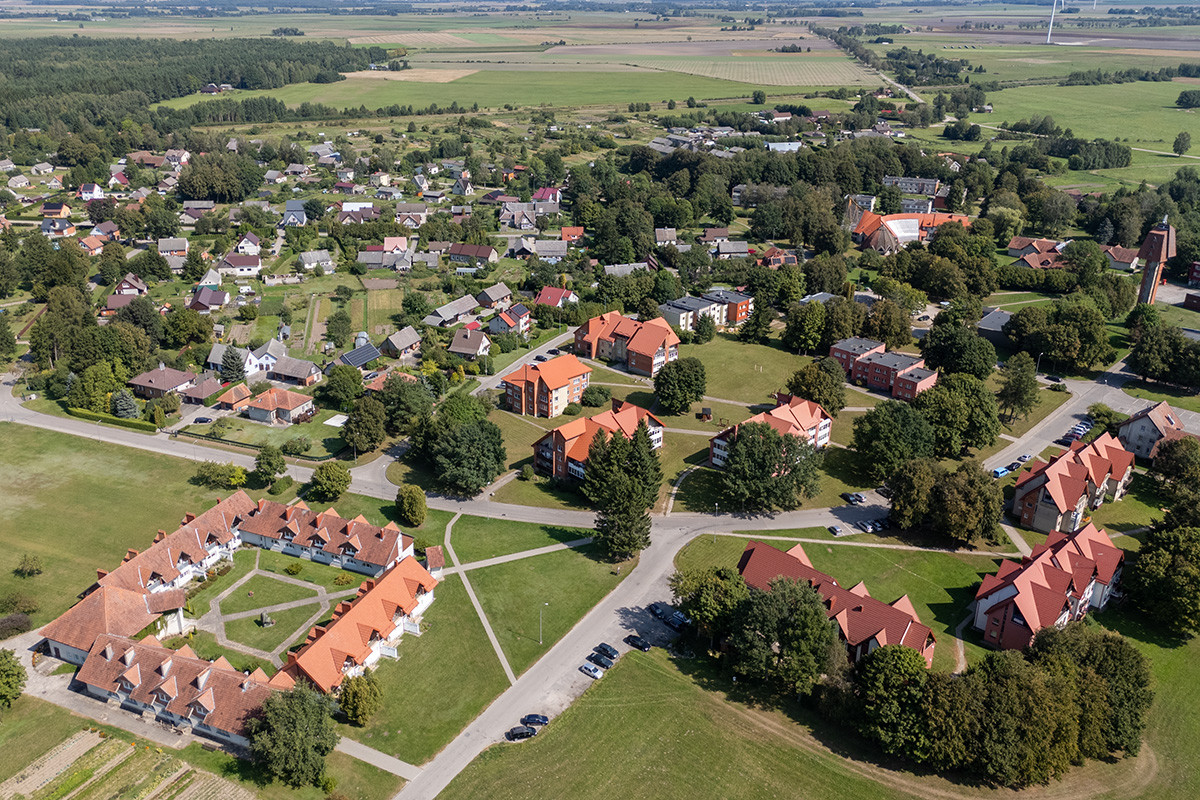
Juknaičiai is an example of modern rural architecture. The name of the village was first mentioned in 1540. At the beginning of the 20th century, Juknaičiai consisted of a dozen farmsteads near the railway and many small homesteads in the surrounding area. Larger farmsteads closer to the Šilutė–Pagėgiai road belonged to the village of Blauzdžiai. Juknaičiai—a small and now somewhat forgotten settlement in Western Lithuania—once became nearly an ideal model of a town. Since 1964, under smart collective farm management, the village was organized in a way that, by the standards of the time, was remarkably well developed. We can even see traces of the garden-city idea here: the rich landscape was designed by architects Rūta and Alfonsas Kiškis. As early as the 1960s, the infrastructure in Juknaičiai surpassed even urban expectations. Disliked in rural areas, apartment blocks here acquired a playful regionalist character. The settlement was planted with clusters of trees, ornamental shrubs, flower beds, and lawns, and was adorned with decorative sculptures. In the park, a “Grove of Hopes” was planted, where parents of newborns would plant oak and linden trees. In 1996, the Šilutė district municipality granted Juknaičiai the status of a park-village, and the landscape was declared protected.
Juknaičiai is rich in artistic accents. The village symbol became a wooden sculpture by artist S. Kuzma—a falcon perched on a horse’s mane. The horse symbolized agricultural labor, while the falcon stood for spiritual elevation and artistic vision. Other sculptures by Kuzma include Eglė and Žilvinas, Flame of Friendship, and Motherhood.
Near Juknaičiai, in the village of Vyžiai, stands a beautiful Evangelical Lutheran church built in 1865. The church is rectangular, in a Gothic-Romanesque style, with a single tower and a five-sided apse. It features 16-register bright-toned pipe organs. The massive 36-meter tower once held two copper bells. The church was damaged during the war and later converted into a grain warehouse. In 1993, it was returned to the Lutheran community, restored, and reopened.
On the outskirts of the village stands Juknaičiai’s Alka Hill. In 2012, an amphitheater was built in Juknaičiai, adding to the village’s beauty.