



Gardamas
The town of Gardamas is located along the Švėkšna–Žemaičių Naumiestis road. It is an old settlement, with its name derived from the word “gardas,” meaning an enclosed place or even a castle or fortress. Historical sources mention it as early as 1561, when its lands were measured according to the valakas system. In 1562, it was noted as the center of a local administrative district (vaitystė), from which royal estate lands were governed—stretching from the villages of Laukstėnai to Juodžiai and Vanagai. Since the 18th century, Gardamas has been referred to as a town. It is notable not only for its beautiful surroundings and the scenic slopes of the Tenesis stream, but also for the “Mažvydas Route” and its Lourdes shrine.
The first church in Gardamas is believed to have been built in the 17th century, but it was destroyed by fire. A new wooden church was built on the same site in 1706. After the wars with the Germans, Gardamas slowly grew as trade routes through Samogitia opened up. However, with the rise of Žemaičių Naumiestis, the role of Gardamas diminished. After the 1795 occupation of Lithuania by Tsarist Russia, the status of Gardamas residents, known as state peasants, worsened: they faced conscription and heavier taxes. During Tsarist rule, Gardamas and surrounding villages became a border region of the Russian Empire. During the press ban era, this border was heavily guarded. Border guard barracks were established along the Naumiestis–Gardamas–Švėkšna road, which was considered the second line of defense. At the end of the 19th century, Gardamas became one of the centers of the Lithuanian book smuggling movement, distributing banned Lithuanian publications.
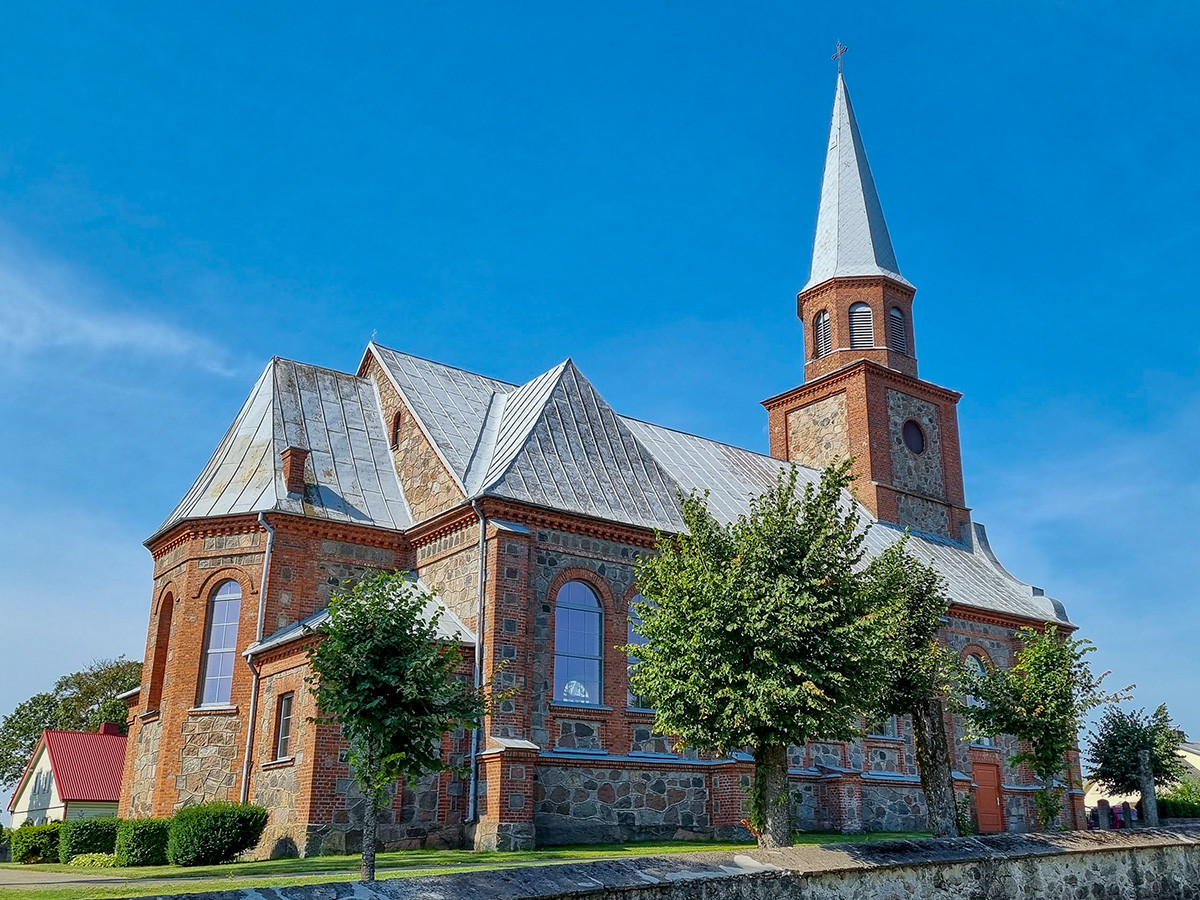
The present-day Church of St. Roch was built in 1932. At its side, in the early 20th century, a miraculous Lourdes was constructed on a slope. The niche was made of fieldstones and is about 1.8 meters high. The story of Lourdes varies among locals. Some say the Virgin Mary appeared there; others say a man’s child was healed despite the man’s disbelief in God. Out of gratitude, the man built the Lourdes. In front of it is a well that never freezes and never runs dry. To the right of the Lourdes, a stone staircase leads to the church. There are 14 steps—the same number as the Stations of the Cross. Elderly people say that climbing those steps is like walking the stations.
Lourdes is a place where flowers always bloom and candles always burn. It is a place where people quietly express their sorrow and joy, a place whose water brings hope and renewal.