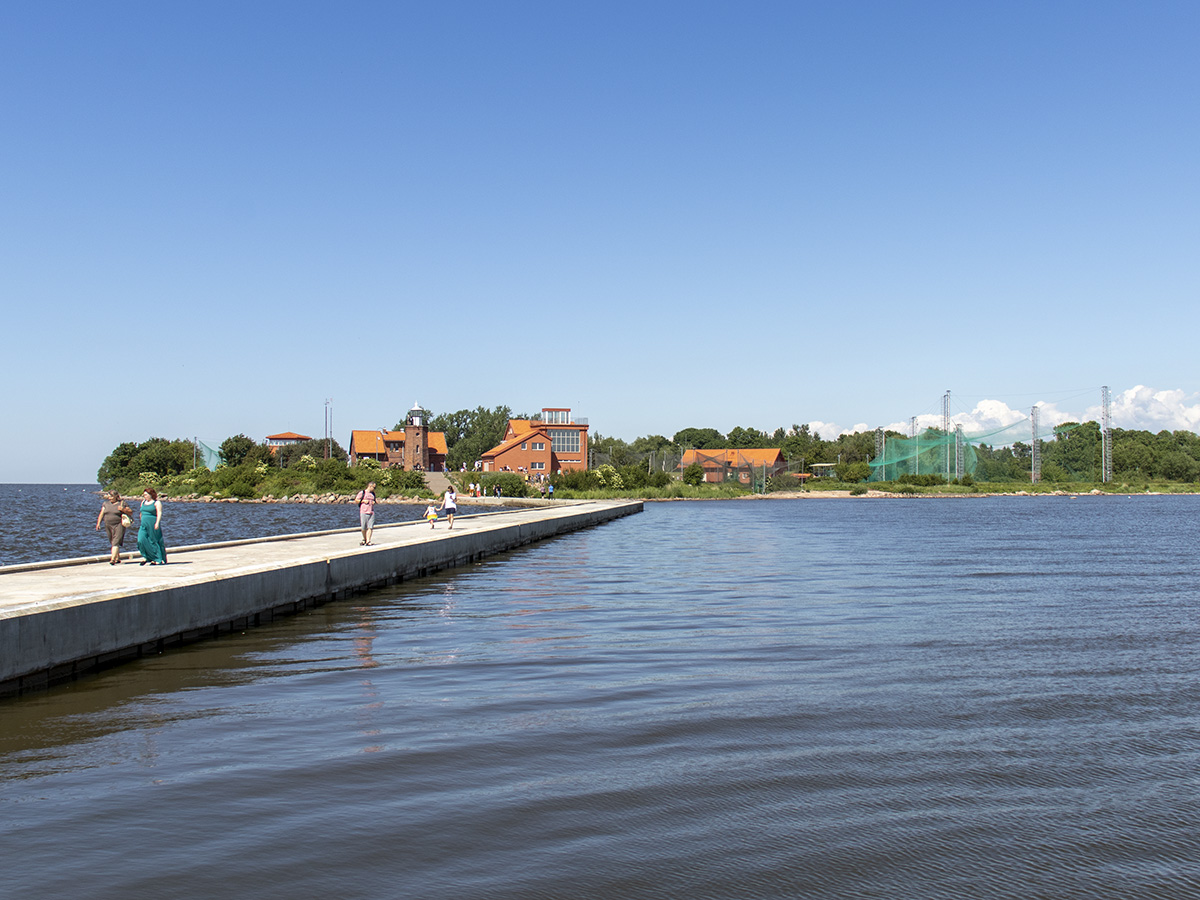
Ventė Cape is the westernmost point of the Šilutė District Municipality, a peninsula on the eastern shore of the Curonian Lagoon. It is 5.5 km long and up to 2.2 km wide. The Curonian Lagoon and Spit were formed during the Littorina Sea period, around 4,500–5,000 years ago. Between 1975 and 1986, the tip of Ventė Cape was reinforced and raised with stone embankments, and a 250 m pier was built. The pier also functions as an icebreaker in winter, protecting the cape from erosion.
Since 1863, a lighthouse has stood at the tip of the cape. The current red-brick lighthouse, built in 1852, is 11 meters tall and is one of the few in Lithuania open to the public. Visitors can climb the old wrought-iron stairs to an observation deck with views of the Curonian Lagoon, the Curonian Spit, and Rusnė Island. It is a protected technical heritage site.
Ventė Cape is also one of the best places in Europe for bird migration research and ringing. Located on a major migratory route, the ornithological station was founded in 1929 by bird ringer Mikas Posingis. The museum and visitor center offer insights into bird migration and ringing history. Over 100,000 birds are ringed each year, and nearly 4 million have been ringed since the station’s founding. It is home to the largest bird traps in Europe, including unique zigzag-shaped traps that work year-round in all weather conditions.
Ventė Cape is the most visited tourist destination in the Nemunas Delta and offers a peaceful retreat by the water.